

This FEBS Lecture Course will be held at Negroponte Resort Eretria, located in 19th km NR Chalkida – Kimi, (www.negroponteresort.gr), Eretria, Evia, Greece. The Conference Centre is with capacity of 400 people. The conference hall offers complete audiovisual facilities and staff services that include Projectors, Microphones, Microphone bases, Audio mix consoles, Sound boxes, Conference consoles, Projection screens, Technical Support and free wifi Internet throughout the building, which guarantee the flexibility and functionality for the organization of high quality conferences. The Negroponte Resort Eretria conference center disposes foyer for coffee breaks. Lunches, welcome reception and dinners will be hosted at Negroponte Resort Eretria. The accommodation of the participants will be covered by the Negroponte Resort Eretria, which is located on the same building with the Conference Centre. This Hotel provides a very friendly atmosphere suitable for interaction between participants as well as for the organization of Speakers corner. The Resort’s facilities stretch for as far as 25.000 m2 acres along the Euboean coastline and include the hotel accommodation with restaurants and bars, organized conference rooms, playgrounds, swimming pools, gyms, football pitches, basketball and tennis courts, beach volleyball and a lot more. The hotel itself is built a few meters from the sea in a “U” shape, surrounding the coast with its 108 rooms and suites fully equipped with all the modern amenities as well as the magical sea, mountains and pine forest views
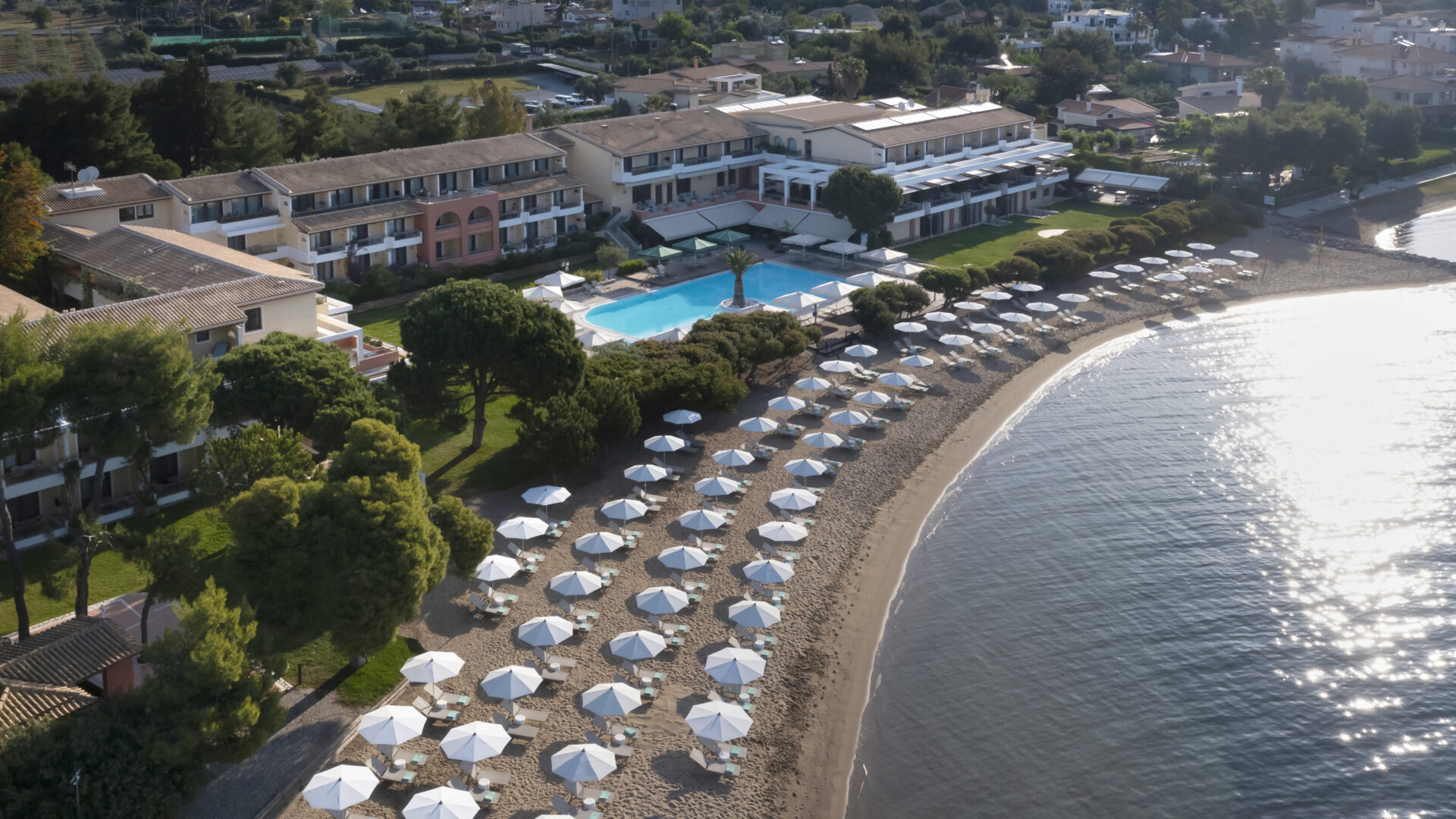
Negroponte Resort Eretria is located on Euboea island in a graphic coastal area 2,5km from the city of Eretria and its archaeological treasures, 19km from the city of Halkida, 70 km from the city of Kymi, where George Papanicolaou(1883-1962) the Greek physician and inventor of the "Pap smear" was born, and just 100km from the International Airport Eleftherios Vezinelos in Athens. Negroponte was the Venetian name of Halkida.

Euboea is the second-largest Greek island in area and population, after Crete, and the sixth largest island in the Mediterranean Sea. It is separated from Boeotia in mainland Greece by the narrow Euripus Strait (only 40 m (130 ft) at its narrowest point).
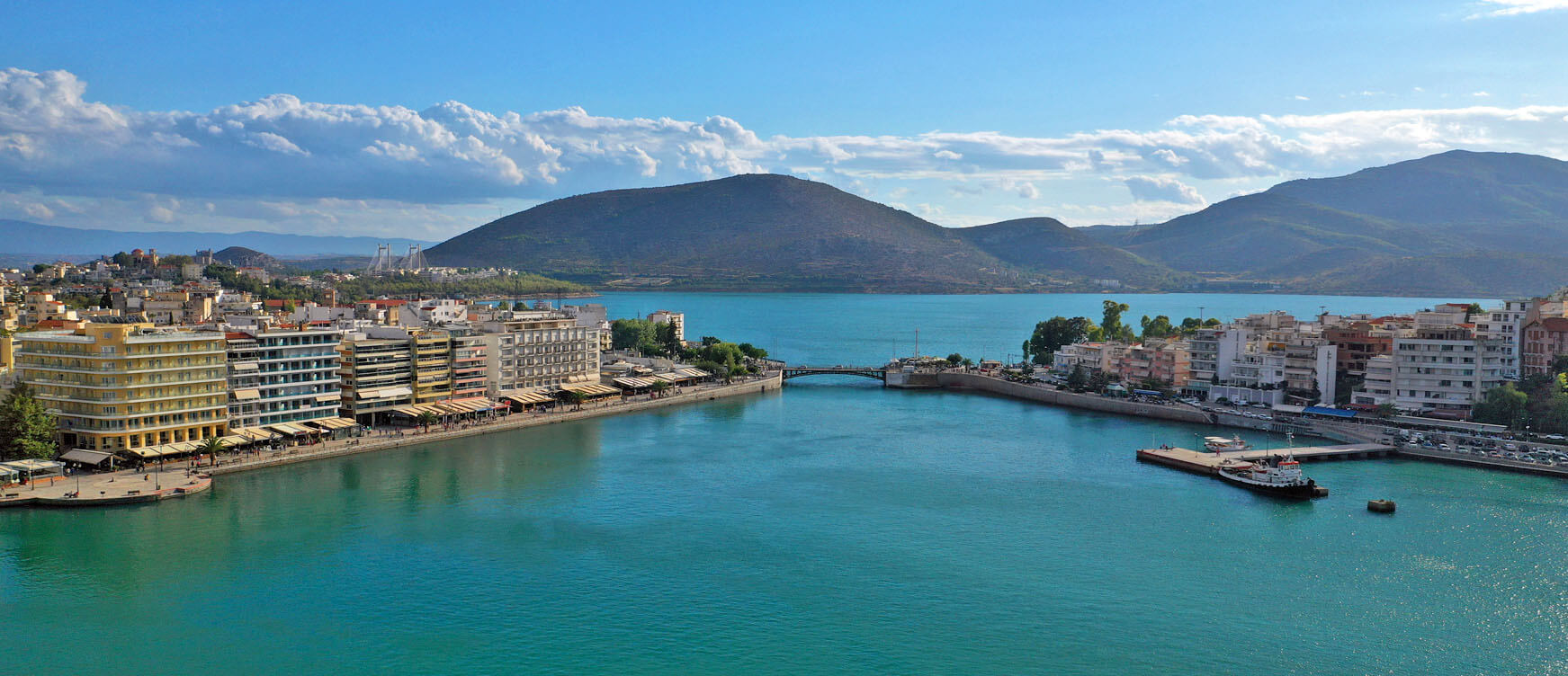
Chalkida is the chief city of the island of Euboea or Evia in Greece, situated on the Euripus Strait at its narrowest point. The name is preserved from antiquity and is derived from the Greek χαλκός (copper, bronze), though there is no trace of any mines in the area. In the Late Middle Ages, it was known as Negropont(e), an Italian name that has also been applied to the entire island of Euboea. Chalkida has a rich history dating back to antiquity. It was first inhabited in the Neolithic period and became an important city-state in ancient Greece, known for its strategic location on the Euripus Strait, which connects the Aegean Sea to the Euboean Gulf. During the Classical period, Chalkida was involved in various conflicts, including the Lelantine War with its rival Eretria. The city later came under Roman, Byzantine, and Venetian control, each leaving its mark on the city's architecture and culture. Chalkida also played a significant role in the Greek War of Independence against Ottoman rule in the 19th century. Today, it's known for its historical sites, including the Venetian castle and the old bridge over the Euripus Strait, as well as its vibrant modern life.
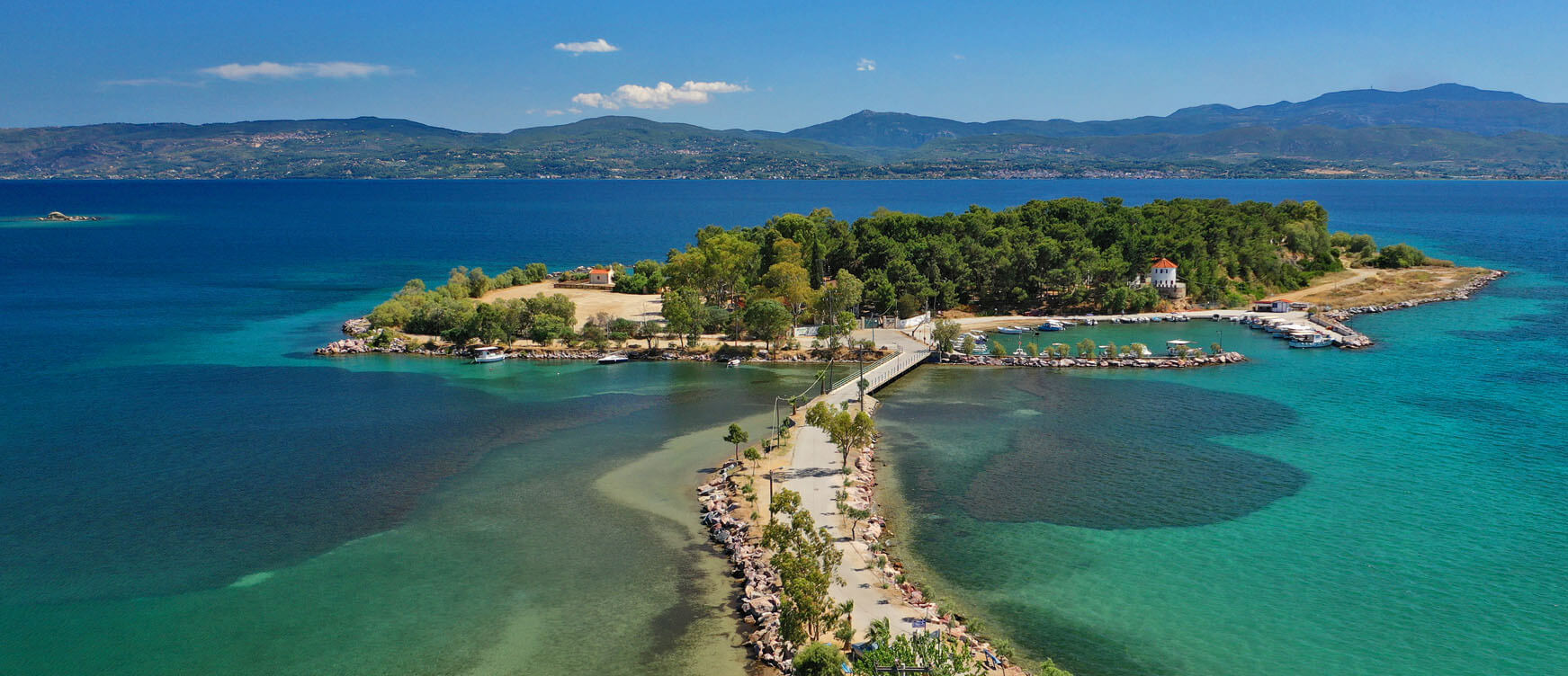
Eretria, an ancient city on the island of Euboea (Evia) in Greece, has a long and storied history. It was founded in the early 8th century BCE and quickly became a powerful city-state, playing a key role in Greek colonization, establishing colonies in the Aegean and Mediterranean. Eretria was a central player in the Lelantine War against its neighbor Chalkida, a conflict over control of the fertile Lelantine Plain. The city flourished culturally and economically, but its prosperity attracted the attention of larger powers. It was destroyed by the Persians in 490 BCE during the Greco-Persian Wars but was later rebuilt. Eretria also played a role in the Peloponnesian War, aligning with Sparta against Athens. Over time, it fell under Macedonian, Roman, and Byzantine control. Despite periods of decline, Eretria is known today for its archaeological sites, including a well-preserved theater, ancient temples, and a museum showcasing its rich history.
Accommodation costs included in the registration fee are for a douple occupancy room.
Accommodation will be arranged by the Course Organizers.
Deadlines

FEBS has twin commitments to high-quality publications and the promotion of molecular biosciences. As a charitable academic organization,
FEBS uses income from the journals to fund its diverse activities, including support for FEBS Advanced Courses.




A charitable organization advancing research in the
molecular life sciences across Europe and beyond.